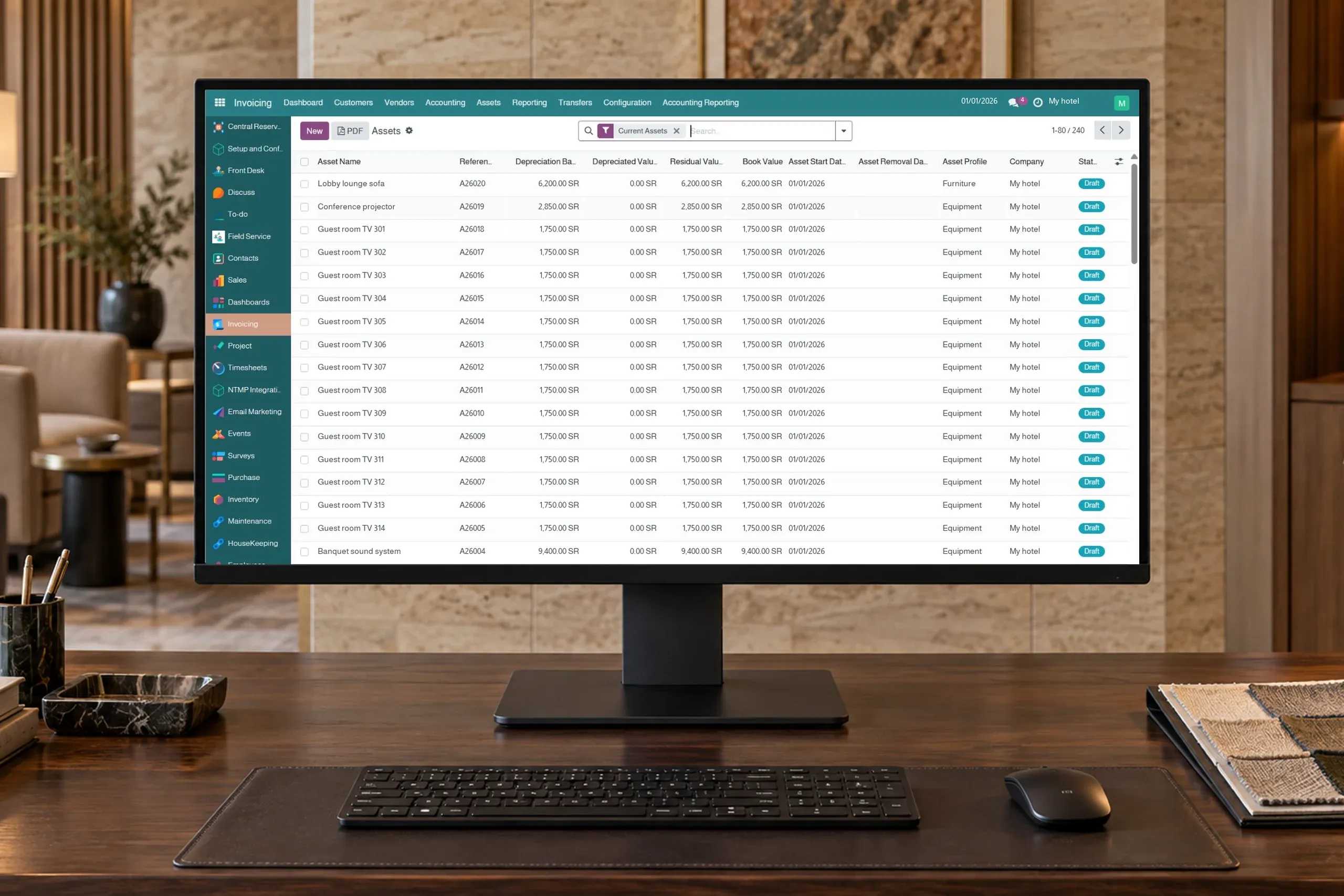
Create an asset record with its name, reference, value and depreciation start date, linked to the company and suitable depreciation profile. Organize furniture, equipment and other fixed assets in a register that supports value tracking.
02
Asset groups
Classify assets in parent and child groups such as room furniture, kitchen equipment and appliances. Groups organize the register and make assets easier to find by classification, while asset profiles define depreciation settings.
03
Asset depreciation
Set depreciation duration and frequency through the asset settings, then review scheduled amounts and dates. Follow accumulated depreciation, remaining value and linked journal entries alongside acquisition cost.
04
Asset transfers
Manage asset transfers within the hotel or operating company’s asset lifecycle. A defined transfer procedure helps keep asset tracking aligned with its use, according to the transfer scope and property procedures.
05
Asset value adjustments
Adjust an asset’s value when a financial review calls for a change. Handle value changes within asset management using the treatment defined by the finance team and company policy.
06
Asset sales
Manage asset sales by reviewing the sale proceeds and remaining value at disposal. Follow the accounting gain or loss using configured accounts and policy, and close the asset lifecycle with clear financial information.
The workflow
Practical example: hotel equipment through its asset lifecycle
01Register equipment with its name, reference and value, then select the company and depreciation profile
02Classify it in a suitable group and review the depreciation duration and schedule
03Track depreciation and remaining value, and manage transfers or value adjustments when needed
04At sale, review proceeds and the accounting impact, then complete asset disposal
Record its name, reference, value, date and company, then choose a suitable depreciation profile. The profile defines calculation settings and accounts used by the finance team.
How do asset groups help hotels and operators?
Parent and child groups organize assets by type, such as furniture and equipment. They make the register easier to browse and similar assets easier to follow within a clear classification.
Can we track depreciation and remaining value?
Yes. The depreciation schedule shows amounts and dates, alongside accumulated depreciation, remaining value and linked journal entries. Asset settings determine depreciation duration and frequency.
How do we use asset transfers?
Flowtel supports asset transfers within the property’s management procedures. A tailored demo shows the transfer process for your use case and identifies the required information and steps for your hotel or operating company.
What is an asset value adjustment?
It handles a change to an asset’s value within asset management when required by a financial review. The finance team determines the reason and appropriate treatment under company policy.
How do we follow an asset sale?
Review sale proceeds, remaining value and disposal accounts, then follow the gain or loss according to the configured policy. This closes the asset lifecycle with its financial impact accounted for.
PMS + ERP + CONNECT
Explore your asset lifecycle from registration to sale